Thursday, 29 January 2015

Northamptonshire Central Library joins the PatLib Network

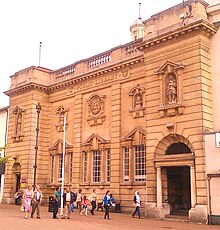
Northamptonshire Central Library
Photo Wikipedia


The PatLib network is a European network of libraries providing information on patents and other intellectual property rights to their local communities. I have written extensively about the PatLib network and you will find basic information and links to my other articles in PatLib Libraries in the UK 29 Jan 2015 Inventors Club blog, There are 15 PatLib libraries in the UK and Northamptonshire Central Library is one of the latest to join the network.

The Library offers a variety of business support and IP services in association with Northamptonshire Enterprise Partnership. These include:
  • information on IP, copies of IPO and EPO literature
  • enquiry service by appointment
  • advice on searching
  • free public access to internet, IP information resources, databases
  • commissioned IP searches
  • bespoke training sessions
  • business information advice sessions
  • referrals to other advice/service providers
  • workshops and seminars.
More information about these and other services can be obtained from the Northamptonshire Enterprise Hub Facebook page.

Sunday, 25 January 2015

Leicester Business sued for Copyright Infringement: McCormack Training Ltd v Goldmark Training Services Ltd and Another

Jane Lambert


In McCormack Training Ltd v Goldmark Training Services Ltd and Others [2015] EWHC 41 (IPEC) McCormack Training Ltd of Birmingham sued Goldmark Training Ltd and its director Ruth Goldsworthy ("Mrs Goldsworthy") of Leicester for copying a training manual used to teach nightclub bouncers and other security personnel how to exert physical restraint. The alleged copy was a manual used by the defendants called the "HZL Hostile and Hazardous Environment Training".  The claimant company was represented by Gateley LLP who instructed Charlotte Scott as counsel. The defendants were represented by Mr Scott Farmsworth who appears to have acted as both litigator and advocate.

The McCormack manual consisted of text and photos of individuals carrying out various physical restraints. The photos had been taken at an hotel in Birmingham in 2009 at the instigation and under the direction of one Andy McCormack ("Mr McCormack") who was the sole shareholder and director of the claimant company. There was no dispute that copyright subsisted in those photos and that those copyrights had been assigned to McCormack Training Ltd. The defendants claimed to have been licensed by the claimant to use those photos. The text was created after the photos and the parties disputed w hether it was written by Mr McCormack or Mrs Goldsworthy. The claimant company also argued that the combination of words and photos created a dramatic work.  Mrs Goldsworthy and Goldmark Trading denied copying and argued that dramatic copyright could not subsist in those works as a matter of law.

This case turned on its facts but the problem for Judge Hacon who tried the case was that he could not rely on either Mr McCormack or Mrs Goldsworthy and her brother Ian Fox who was also a director of the defendant company. He described Mr McCormack as "a garrulous witness who was often imprecise about dates and other details and was inclined to respond to questions by delivering argument rather than answering the question put to him." He found "Mr Fox and Mrs Goldsworthy were more self-controlled, but equally unsatisfactory as witnesses."

Relying largely on extrinsic evidence the judge concluded that there was no licence to copy the photos but that Mrs Goldsworthy was the author of the text. As McCormack's could not claim copyright in the text any claim for infringement of dramatic copyright had to refer to the photographs. Because one photograph of a dramatic work in progress could not constitute a record of that work such as to give rise to copyright in it as a dramatic work, copyright could not subsist in any of the sequences. His Honour added at paragraph [90]:
"Since one photograph of a physical restraint technique does not record the technique as a dramatic work, a collection of such photographs cannot record a sequence of techniques such as to create copyright in the sequence as an overall dramatic work. Moreover, there was no suggestion that the techniques had to be 'performed' in any fixed sequence. In my view an arbitrary sequence of physical restraint techniques, one possible sequence in many, could not collectively constitute a dramatic work."
The upshot was that the claim succeeded in respect of the photos but failed in respect of the literary and dramatic works.

The claimant had sought additional damages under s.97 (2) of the Copyright, Designs and Patents Act 1988. Referring to his decisions in Henderson v All Around The World Recordings Limited [2014] EWHC 2087 (IPEC) and DKH Retail Limited v H. Young (Operations) Limited [2014] EWHC 4034 (IPEC) which I discussed in Inquiries as to Damages in the Intellectual Property Enterprise Court: Henderson v All Around the World Recordings Ltd. 6 Nov 2014 NIPC Law and What is the definition of "design" in s.213 (2) of the Copyright, Designs and Patents Act 1988 following the deletion of "any aspect of" from the sub-section 13 Dec 2014 the judge held that additional damages were available only in accordance with art.13 (1) of Directive 2004/48/EC on the enforcement of intellectual property rights. In his judgment none of the circumstances for awarding additional damages applied to this case.

Should anyone wish to discuss this note or copyright in general he or she should call me on 0115 824 9090 during normal office hours or use my contact form.

Thursday, 11 December 2014

Hinckley company wins copyrights and unregistered Community design action


Jane Lambert

Fashion and textiles are an important industry in the East Midlands. According to Wikipedia
"Hinckley is a traditional centre of the hosiery industry. The first framework knitting machine was brought here by Joseph Iliffe in the 17th century and by the 19th century Hinckley was responsible for a large proportion of Britain's hosiery production. Since the Second World War the hosiery industry has steadily shrunk in size although several textile firms remain in the area."
Perhaps because of its connection with fashion and textiles Wikipedia also reports that Hinckley is home to the creative industries with up and coming graphic designers.

In John Kaldor Fabricmaker UK Ltd v Lee Ann Fashions Ltd [2014] EWHC 3779 (IPEC) (21 Nov 2014) a Hinckley clothing manufacturer successfully resisted a claim for copyright and unregistered Community design infringement by a London design house because it was able to show that its fabrics, though similar to the claimant's, had been designed independently. For those who want to know details of the case I have written the following article Is this a copy? John Kaldor Fabricmaker UK Ltd v Lee Ann Fashions Ltd 11 Dec 2014 NIPC Law.

There are a couple of important lessons from this case.

The first is that the claimant would have won had it registered its design as a registered design in the UK under the Registered Designs Act 1949 or as a registered Community design for the whole UK under the Community Design Regulation as you don't need to prove copying for registered or registered Community design infringement - only that the defendant's design does not produce on an informed user a different overall impression. As there is no examination of for registered or registered Community designs it is a lot cheaper and more straightforward to apply for a design or Community design registration than it is to apply for a patent or even a trade mark.  Many businesses do it for themselves.

The second is that IP litigation is no longer something to be feared as there are now limits to the costs that can be incurred and courts focus on the important issues so that trials are finished within a day.

If anyone wants to discuss this case or indeed copyright and Community designs in general he or she should call me on 0115 824 9090 or 020 7404 5252 during office hours or use my contact form.

Wednesday, 29 October 2014

Launch48 Leicester

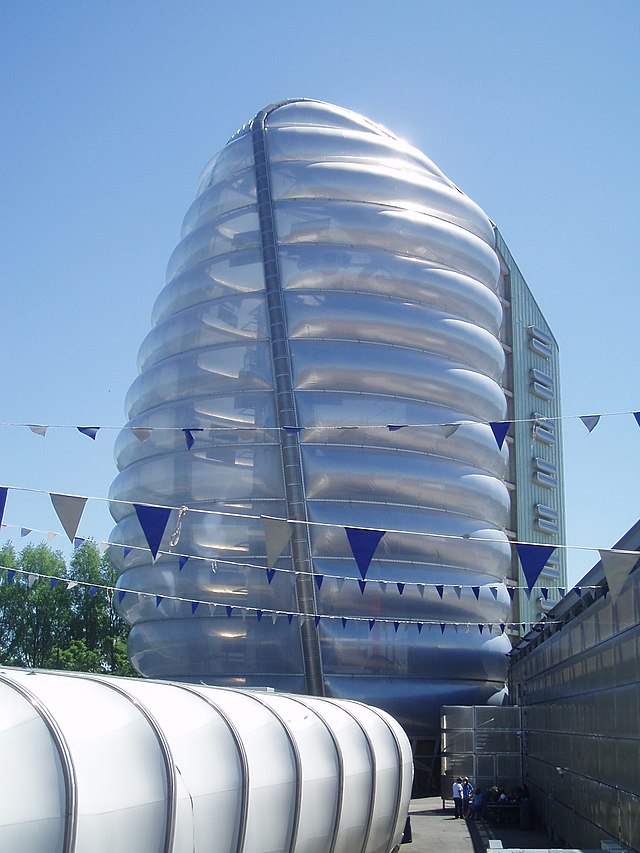
National Space Centre, Leicester
Photo Wikipedia


Jane Lambert


Launch48 Leicester is described as "a high energy weekend to pitch, build and launch a start-up in 48 hours". It will take place at Dock which is next door to the National Space Centre in Leicester between 18:00 on 21 and 22:00 on 23 Nov 2014.

The programme is offered by Oxygen Enterprise Partners Ltd ("Oxygen") in conjunction with the Leicester and Leicestershire Local Enterprise Partnership. Oxygen delivers a series of programmes that invest in, support and bring to life early stage and growth businesses.  In this video Oxygen explains what happens in during these weekends. At a cost of £39.95 (or £29.95 if you are a student) it seems very good value.

If you want to attend this event here is the link to Oxygen's Eventbrite page.

Friday, 12 September 2014

Design Basics

Jane Lambert


We use the noun design in two senses. We talk of "designer jeans" but also of "engineering design" and architecture. We even talk about designing services. The one relates to appearance and the other to function. There is of course overlap. A well engineered bridge or the aerodynamic lines of an aircraft or sports car are usually things of beauty.

The law draws a similar distinction.  The "appearance of the whole or a part of a product resulting from the features of, in particular, the lines, contours, colours, shape, texture and/or materials of the product itself and/or its ornamentation" can be registered with the Office for Harmonization in the Internal Market ("OHIM") or the Intellectual Property Office ("IPO") as registered Community designs ("RCD") for the whole of the EU or as registered designs for the UK alone so long as they are new and have individual character.  Registration of a design confers the exclusive right to use it and to prevent any third party not having his consent from using it" in the territory for which it is registered. That includes "in particular, the making, offering, putting on the market, importing, exporting or using of a product in which the design is incorporated or to which it is applied, or stocking such a product for those purposes." Designs are registered for 5 renewable terms of 5 years each making a total of 25 years. This regime is suitable for items with a long production run such as kitchen equipment and furniture where a product's appearance is important.

There are of course goods like toys and clothing with a much shorter shelf life where a 25 year or even a 5 year term is quite unnecessary.  For the design of such items there is automatic protection against copying for up to 3 years throughout the EU from the date on which the design was first made available to the public as unregistered Community designs ("UCD").

Functional designs are protected in the UK by an intellectual property right that is almost unique to this country known as unregistered design right.  Right now design is defined as "the design of any aspect of the shape or configuration (whether internal or external) of the whole or part of an article" but that definition  is to change from 1 Oct 2014 to "the design of ......  the shape or configuration (whether internal or external) of the whole or part of an article". The important point is that the design does not have to look good (though of course it can) and protection extends to the mechanical parts or circuitry of the article as well as its external shape. The design does not have to be new or have individual character and design right comes into being automatically just as soon as the design is embodies in a prototype or recorded in  a drawing or CAD file but the design does have to be original in the sense that it was not copied from an earlier design and was not commonplace in the design field in question at the time of creation. Design right protects not the design concept or technology as such but a particular shape or configuration from copying. It is at least theoretically possible for two people to come up with the same design in which design right subsists so long as neither copies the design f the other. Design right lasts for up to 10 years after products made to the design are placed on the market but for the last 5 years of the term anyone can apply to the design right owner for a licence to make products to the design as of right.

Design right does not cover every aspect of the design of a product and in particular it does not protect "surface decoration". For wall paper, fabrics and other two-dimensional designs designers rely on indirect protection under the law of copyright.  Essentially the art work for the design is treated as an artistic work in which copyright subsists for the life of the author plus 70 years and making copies of the design is essentially making copies of the artwork.

At present actions to restrain or recover compensation for infringements of a registered design or RCD in England and Wales have to be brought in the Patents Court or the Intellectual Property Enterprise Court ("IPEC") which are part of the Chancery Division of the High Court of Justice. Claims for UCD, unregistered design right or copyright infringement can be brought in IPEC or any other judge of the Chancery Division or in certain county courts where there is a Chancery district registry of which there are none in the East Midlands. From the 1 Oct 2014 it will be a crime intentionally to copy a registered design or RCD so as to make a product exactly to the design or with features that differ only in immaterial details to the registered design.

Design law is a very complex area of the law but it affects a lot of businesses in the fashion, furniture, household goods, pottery and related industries. If you want to understand it better you should come to our workshop on IP at Grantham College on 26 Sept 2014 at 14:00. We shall also discuss the laws that protect innovation in branding, technology and works or art and literature. After the talks you can have free one-to-one discussions with our speakers. I look forward to meeting you there.

Wednesday, 10 September 2014

Copyright Basics

Jane Lambert


Almost everybody has a copyright in something. It is most likely to be a letter but it could be also an app, article, blog, dance routine, drawing, essay, musical composition, painting, photo, poem, recording of a song, unpublished first novel or amateur video.  The person who made such work is known as "the author" and he or she has the right to prevent others from copying that work, publishing, renting, lending, communicating it to, or performing it in, public, translating or otherwise adapting it for a very long time. In the case of some of those categories of works for the rest of the author's life plus 70 years. If others want to copy, publish or perform his or her work the author can  charge a licence fee or royalty for the right to do so.

But there's another side to copyright and that is that many of the things that entertain such as films, games, magazines and music or use at work such as data sets, directories, software, terms and conditions of business are also copyright work and the owners of the copyrights in those works have the right to stop us from downloading, copying and, in the case of software, just using those works without their permission for which they usually want money. And to a consumer or a small businessman such restrictions just seem petty, and complying with them even daft, when so many people are making recordings, posting photos or videos to their social media pages without paying anyone anything and apparently getting away with it. There is often real resentment when a group of copyright owners take down a website which has been a source of free music or videos or sue or even prosecute the people behind them. However there is a reason for these laws and that is that arts, broadcasting, entertainment and much of the information and communication technology industries  rely on copyright for their very existence. Since their output excites us, inspires us, comforts us and generally makes our lives worth living, we have an interest as well as a legal duty to comply with those laws.

Copyright is an intellectual property right that comes into being automatically. It subsists automatically as soon as you create the work even before the ink is dry so long as you are a citizen or resident of the United Kingdom or of some other country which has agreed with the British government to protect the works of British authors in its own territories. Since our country is party to the Berne and Universal Copyright Conventions and the Agreement on Trade-Related Aspects of Intellectual Property Rights ("TRIPS") under which each party promises to protect the artistic and literary works of each other's nationals and residents that is more or less everybody. You don't have to register your work with the Intellectual Property Office or some other office or organization. You can if you wish insert insert the copyright symbol , "©", the letter "C" in brackets, or the word "copyright" together with your name and the year in which the work was created but it isn't necessary for the subsistence of copyright in the UK.

In addition to copyright the author of certain types of work in which copyright subsists get the right to be identified as the author, the right to object to derogatory treatment of their work, the right not to be identified as the author of someone else's work and a right to privacy in photos and films. There are known as "moral rights" and protect the reputation of the author and the integrity of his or her work. They subsist quite independently of copyright and can sometimes be retained after the copyright has been assigned.

The rights of the copyright owner that I mentioned above are not absolute. They are subject to a whole slew of statutory exceptions which allow you to quote from, refer to, or make some other use of, a copyright work.  There are many licences such as those drafted by "Creative Commons" under which authors license their work or very generous terms. Many authors or publishers (but by no means all) actively encourage you to share their work.

But there are also associations of copyright authors known as "collecting societies" who police their members' works and charge licence fees or royalties for the right to use them. One of the best known collecting societies is the Performing Rights Society which represents composers, songwriters and publishers. You often see their stickers in bars and restaurants to show that the owner has a licence to play their members' music. They have teamed up with the Mechanical Copyright Protection Society to protect the rights of the recording industry. In addition there are organizations like FAST (Federation against Software Theft) and FACT (Federation against Copyright Theft) which pursue and sometimes even prosecute those known as "pirates" who infringe (violate) the rights of copyright owners on a big scale.

Copyright is usually enforced by copyright owners through proceedings in the civil courts - the Chancery Division of the High Court of Justice and certain county courts in England and Wales. The usual remedies are injunctions (orders of the court to stop or refrain from doing something), handing over to the copyright owner all unlicensed copies, paying damages (compensation) or surrendering ill-gotten gains (an account of profits) providing information under oath and paying all or contributing substantially to the other side's legal fees ("costs"). However, some copyright infringements are also crimes for which the maximum penalty is 10 years imprisonment, an unlimited fine or both.

Copyright is a complex area of the law and I shall be talking about it in more detail in my seminar "Making Sure you make Money from your Brands and Ideas and not other People" at Grantham College on 26 Sept at 14:00. Entrance is by ticket only. You can book your place on-line or by calling my clerk George on 020 7404 5252. I look forward to seeing you there.

Saturday, 6 September 2014

So what's a patent?


Jane Lambert

"What's a pay tent?" asked Boris sinking his first pint in The Beehive.

"Well for a start it's called "PAT TENT" I replied. The "pat" rhymes with 'grass' where I come from. Or 'mat' if you are from anywhere else.   Not 'pay tent'.  I think that's another word for 'beer tent' in some parts of the world.

"Like Finchley" suggested Boris who was a bit of a fan of Grantham's most famous daughter.

"I don't think they know about beer down south" I replied. "Anyway a patent is a monopoly of a new invention."

"What sort of invention?" asked Boris. "Well a new product or process I replied, unless it is something banned by the Patents Act 1977."

"How new?" asked Boris.

"Very new" I replied. "It's got to be something that has never been made available to the public before anywhere in the world. If it has already been invented it forms part of what we call 'the prior art'.  The Act says
'An invention shall be taken to be new if it does not form part of the state of the art.'"
"Ah" said Boris pensively. "And what sort of things are excluded?"

"Computer programs, methods of doing business, literary works, discoveries, that sort of thing" I replied.

"Really" said Boris, "but I have heard of someone getting a pay - sorry pat - tent for what seems to have been a computer program."

"That may have been in the States" I replied "or somewhere else that has a different definition of an invention. Or it might even have been here for our Patents Act provides that those exclusions
'shall prevent anything from being treated as an invention for the purposes of this Act only to the extent that a patent or application for a patent relates to that thing as such.'
So if it is say a machine tool that is controlled by a program it may still be a patentable invention as a machine took even if the only thing that is new about the tool is the software program."

"I'm lost" said Boris. "It sounds awfully complicated."
"It is" I replied. "That's why you need a patent attorney to assist you if you want a patent."

"What do you mean by a monopoly?" asked Boris after a few minutes.
"Well it means that the person who owns the patent is the only person who can make the invention if it is a product. He's also the only one who can disposes of the product or offer to dispose of it.  Only he can use or import the product or keep it whether for disposal or otherwise."
"By 'disposal' you mean 'sell?'" asked Boris.
"Or get rid of in any other way such as giving or leasing" I added.
"And what if it's a process? Like a new way of making gingerbread?"
"Well it can be infringed by using the process so long as he knows, or it is obvious to a reasonable person in the circumstances, that its use without the consent of the owner would infringe the patent."
"Infringed?"
"Violated or breached." I added. "Also if the invention is a process you can infringe it by  disposing of, offering to dispose of, using or importing any product obtained directly by means of that process or even keeping such product for disposal or otherwise."
"The gingerbread" yes if it's a new process for making gingerbread or baked beans it it's a process for making baked beans."
"Not sure I like baked beans" said Boris "or rather I like them but they don't like me. Does it have to be food?"
"No it can be a complex biotechnology process for making a new drug or some other wonderful new product."

Boris took another sip of ale. "Ah" quoth he contentedly. I finished my glass of sparkling mineral water as I was driving the motor.

"So what does a patent look like?"

"Well it doesn't look like anything because it is a legal right but the owner of a patent is granted a certificate of grant and the terms of his grant is set out in a document called a "specification".  This is generally in three parts. First, there is a description of the invention and the technical problem it is intended to solve. Secondly, there are instructions as to how to make or use the invention. Lastly, there are a number of numbered paragraphs called the "claims" which set out the features of the invention. Anyone who makes a product or uses a process with all the features of any one or more of those claims infringes the patent. You can find out more about specifications by downloading Patents: Application Guide from the Intellectual Property Office website.

"So how do you get a patent?"

"Well first you have to make sure that you have an invention that is absolutely new." I replied. "You can do that by obtaining a search of the prior art. It is very difficult to get a comprehensive one because so many of the world's inventions are now created in China, Japan and Korea and not many people in this country understand those languages. Also, not every invention is patented. Many people just make or use their new product or process without applying for a patent. But if it has been made available to the public by say putting it on sale or writing about it in  newspaper or technical journal it forms part of the prior art.

Then you have to make sure the invention involves an inventive step, that is to say it is not obvious having regard to the state of the art. Something can be new but still not be patentable because it is a minor improvement on what was already known. Something that would occur to a workman with a spanner for example.

Then it has to be useful.

Finally, it has to fall outside any of the statutory exceptions I mentioned sooner."

"My head's spinning" said Boris.

"Maybe you need another drink" I said gesturing to the barman who served up another pint for Boris and a small mineral water for me.

"Is that all you're drinking?" asked Boris.

"That's why my head's not spinning" I replied.

"So where do I get a search from?" asked Boris.

"Your patent attorney will look after that but if you don't have a patent attorney you could do worse than ask Ged or Stef at Leeds Business and IP Centre to do a search.  If the search finds something that anticipates (that is to say something that is exactly the same as) your invention or so close that your invention is obvious then that is the end of the matter. You won't get a patent for it, at least not in this country. If however the search finds nothing then it may be worth lodging an application."

"Do I need a lawyer for that? You mentioned an 'attorney'".

"'Patent attorneys' or 'patent agents' as they are also called offer a range of services relating to patents and other intellectual property rights. Most of them belong to the Chartered Institute of Patent Attorneys. There's actually a firm in Lincoln called LovenIP. Patent attorneys have scientific or technical qualifications - many have doctorates - as well as a thorough grounding in intellectual property law. They will draft your specification in such a way that it discloses your invention ....."

"Why would I want to do that?" asked Boris "Isn't that just giving away the invention."

"That's the deal, Boris. In exchange for teaching the world how to make or use your invention the government gives you the exclusive right to make, use, dispose of, import etc that I mentioned above for up to 20 years."

"Up to?" queried Boris.

"Yes" I said. "You have to pay renewal fees which actually increase over time in some countries and then if the court or Intellectual Property Office finds that your invention was not really new or that you failed to disclose it sufficiently clearly or sufficiently fully they can revoke it just like that."

"Do you get your money back" asked Boris.

"No" I replied.

"Crikey" spluttered Boris as he sprayed beer all over the bar.

"You all right old son?" I asked as he looked distinctly pale.

"Complicated business this patenting malarkey."

"Indeed it is" I agreed. "That's why you should come to my talk on IP at Grantham College on the 26 Sept 2014 at 14:00. But you will have to hurry as places are bound to fill up."

"Not a chance" said Boris. "This is Lincolnshire you know."

On leaving the pub Boris was stung by a bee which served him right don't you think.

Related Articles

19 Mar 2014
IP South East
2 Aug 2013
Jane Lambert How to read a Patent
IP London